Level Design Case Study:
Farm (Arena Breakout) vs. Zero Dam (Delta Force)
How does map geometry influence player decision-making in extraction-based shooters? This project breaks down the environmental storytelling and tactical flow of Arena Breakout’s iconic Farm map. Through competitive benchmarking and heat-map logic analysis, I explore the mechanics of "survival pressure" versus "combat thrill." The study culminates in a series of design optimizations aimed at resolving spawn-point friction and enhancing strategic depth, showcasing a data-informed and player-centric design philosophy.
Arena Breakout Experience Report: Farm vs. Zero Dam
Level Design Analysis for Newcomer Maps
1. Game Positioning & Core Design Goals
Game Positioning: Realistic Art Style, High-Risk/High-Reward, Resource Collection, Tactical Engagement, Survival Extraction.
Core Loop Design: Unlike the "Kill-to-Win" mechanic in traditional FPS games, Arena Breakout builds its closed loop around "Loot-Engage-Extract." The player's goal is not total enemy annihilation but asset appreciation through resource management (backpack weight, ammo consumption) and route decision-making (dynamic extraction points, high-risk area avoidance).
Looting: Resources serve as "pressure carriers" (the higher the value, the greater the psychological burden).
Engagement: Information asymmetry builds the foundation for "psychological warfare."
Extraction: The "Peak-End" moment where accumulated pressure is converted into a dopamine rush.
2. Competitive Analysis: Arena Breakout vs. Delta Force
To analyze the level design of Arena Breakout and Delta Force, one must start from the core gameplay and Character 3C (Character, Controls, Camera). The difference in their out-of-game economic systems leads to distinct design philosophies.
Core Design Comparison:
Design Goal: * Arena Breakout: Survival pressure-driven sandbox.
Delta Force: Skill-driven fast-paced combat.
Art Style: * Arena Breakout: Realistic Military.
Delta Force: Near-future Sci-fi.
Core Loop: * Arena Breakout: Observe-Orient (Information gathering and decision-making).
Delta Force: Act-Confront (Execution and direct combat).
Tactical Pace: * Arena Breakout: Slow-paced progression.
Delta Force: Fast-paced confrontation.
Flow Peak: * Arena Breakout: Successful Extraction.
Delta Force: Multi-kill streaks.
3. Map Design: Driving the Core Gameplay
Comparison: Farm (Arena Breakout) vs. Zero Dam (Delta Force)
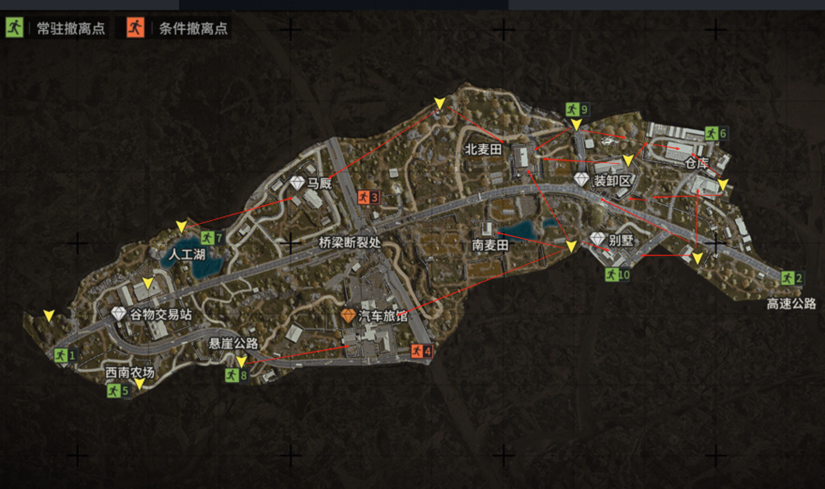
Farm: Features a linear flow with a symmetrical layout. The east-west main roads force encounters, while simplified two-story buildings reduce decision complexity for new players, guiding them toward core conflict zones.
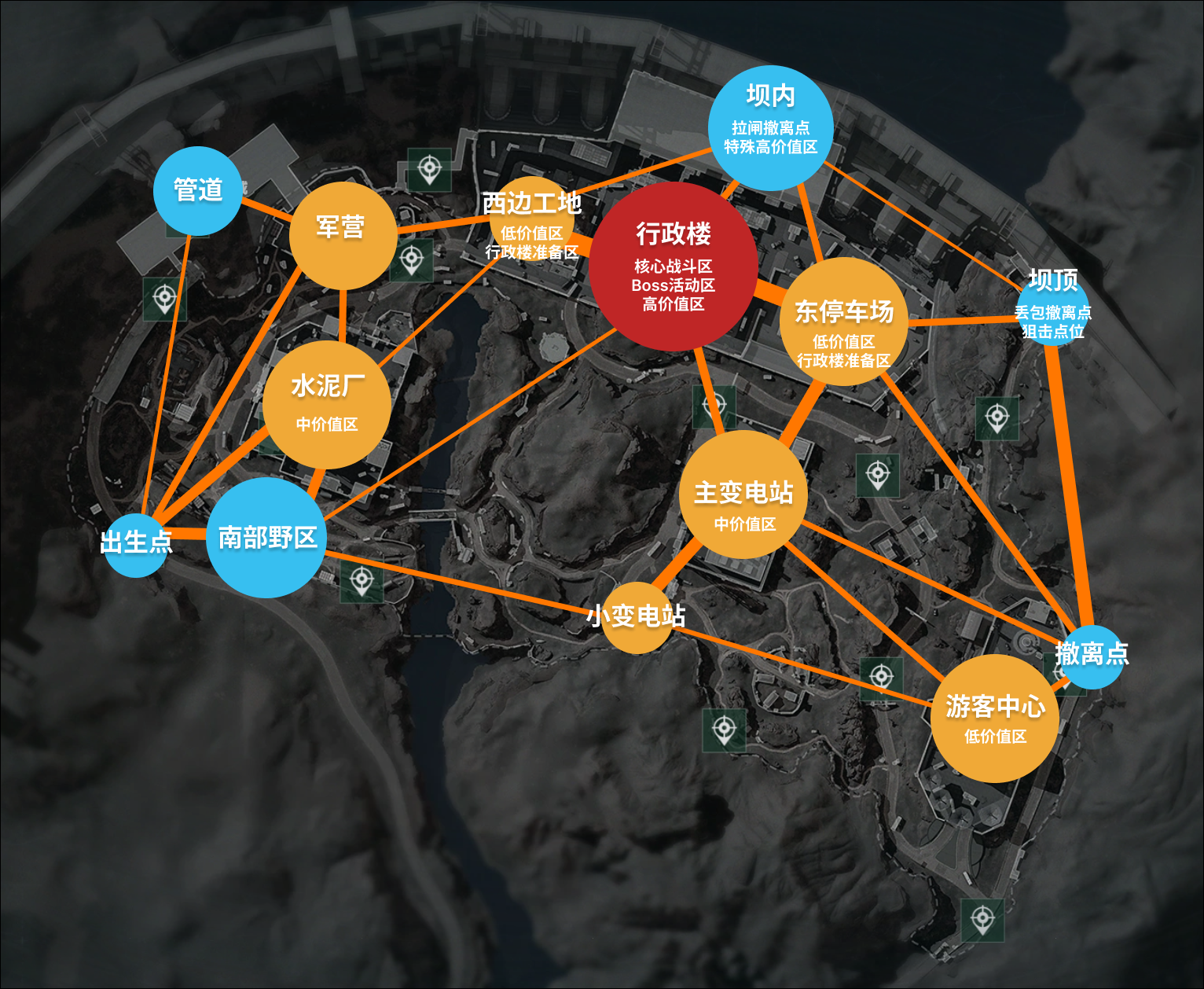
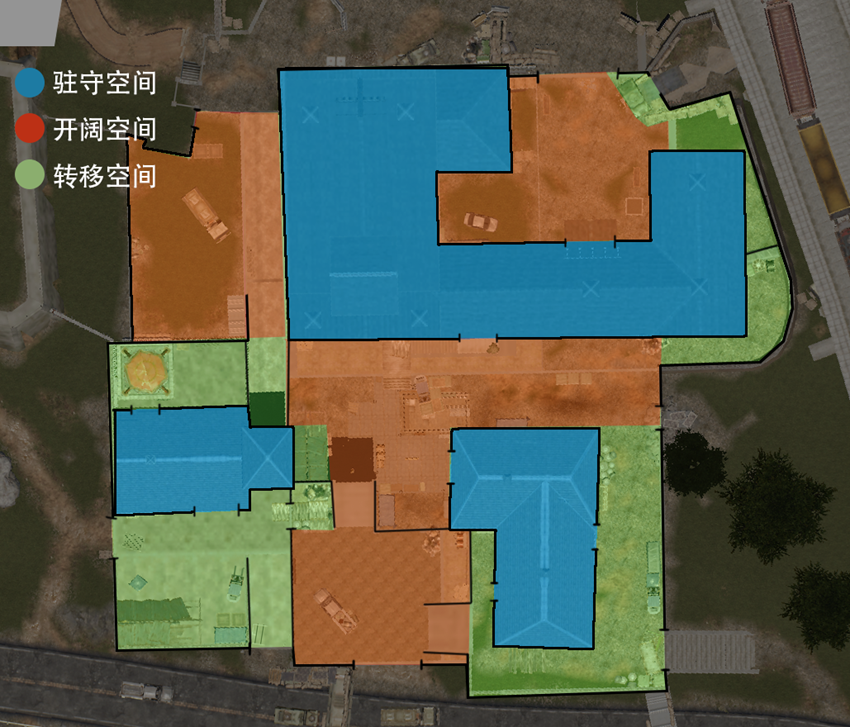
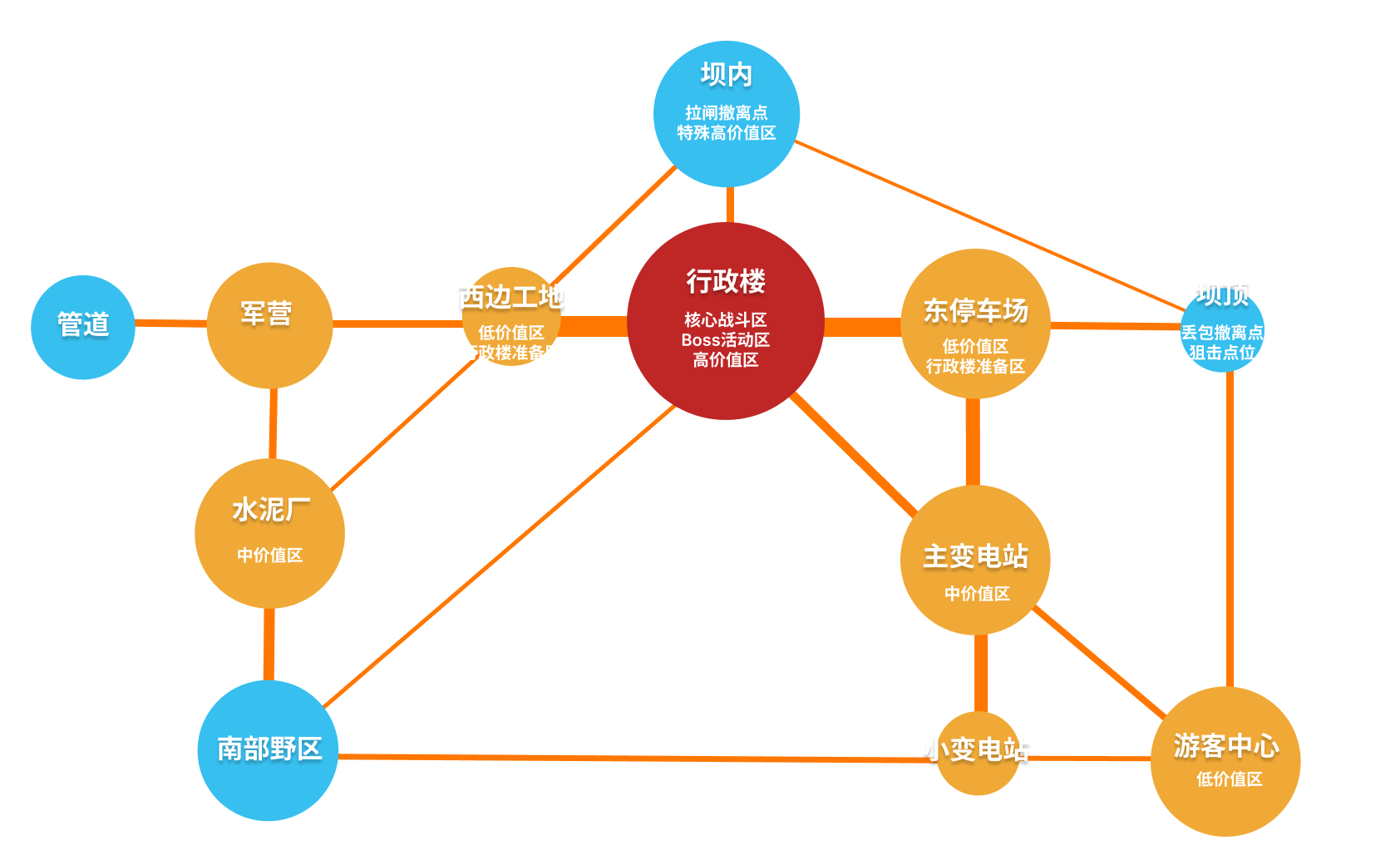
Zero Dam: Focuses on space dilution and core hotspots. It utilizes mutually exclusive spawn points and chokepoints to force high-intensity combat in complex structures, emphasizing the "Combat Thrill."
Encounter vs. Annihilation:
Arena Breakout (Encounter): Combat is a random event in a survival sandbox, triggered by resource competition. The level design emphasizes stealth, positioning, and the choice to avoid combat.
Delta Force (Annihilation): Combat is a pre-defined ritual. Maps serve as stages for "Hero Operators" to showcase skills and synergy, where combat is often unavoidable and encouraged.
4. Player Flow & Movement Planning
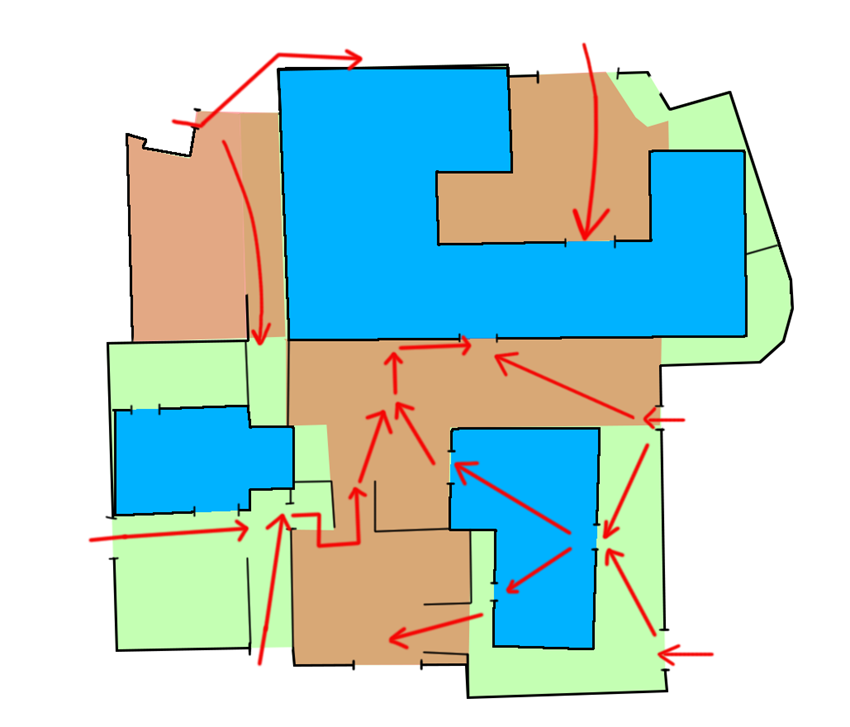
Movement Types: Delta Force uses multi-directional breakthroughs with dense entrances and vertical paths. In contrast, Arena Breakout employs a funnel-like convergence where Points of Interest (POIs) act as key nodes along a primarily horizontal axis.
Conflict Triggers: In Delta Force, combat often erupts near spawn points (front-loaded conflict). In Arena Breakout, conflicts are staggered and "delayed" through space, concentrating in the mid-to-late game around high-value resource zones or extraction paths to increase tactical depth.
5. Strategic POI Analysis: The Motel
The Motel is the heart of the Farm map, acting as a high-risk, high-reward "survival filter."
Spatial Construction: Located in the south-central part of the map, it offers diverse and relatively safer entry/exit points on the east and west sides to accommodate the natural east-west player flow.
Player Archetypes: The design supports three distinct playstyles:
"Aggressive Gunners" rushing the Motel for top-tier loot.
"Tactical Operators" looting mid-tier points like the Villa or Stables.
"Survivalists" skirting the northern edges to prioritize extraction.
6. Optimization & Future Outlook
Existing Pain Points:
Spawn Point Friction: With 11 spawn points on a medium-sized map, certain spots lead to immediate "spawn-peeking" or unavoidable early-game stalemates, reducing strategic freedom.
Sniper Dominance: Over-concentration of movement paths and open fields allows snipers to exert excessive map control without sufficient counter-play options.
Proposed Solutions:
Guaranteed Non-Core POIs: Assign stable, lower-tier looting spots near every spawn point (e.g., Grain Trade Center or Loading Area) to resolve immediate conflicts and provide a "safety baseline" for the early game.
Path Dilution & Map Expansion: Expand the map toward the North and South to provide more route options. This would weaken the oppressive range of sniper rifles and dilute player density.
Counter-Sniper Design: Implement more explicit sniper nests (like the South Wheat Field 2nd floor) with clearly planned flanking routes to create a balanced "rock-paper-scissors" engagement dynamic.
Dynamic Sandbox Elements: Introduce environmental changes (weather, destructible elements) and dynamic resource refreshes to break fixed looting patterns and enhance immersion.